
Key Takeaways
- Retailers manage identities across stores, warehouses, headquarters, ecommerce, and partners, often with high turnover and seasonal hiring.
- The 2025 Marks & Spencer attack began with an impersonation that tricked a third party into resetting an employee's password, and M&S expected a hit of about £300 million to operating profit.
- The biggest retail identity risks are seasonal and temporary staff, supplier access, help desk resets, shared store devices, and a blurred line between workforce and customer identity.
- A practical retail identity and access management program ties access to HR records, sets end dates for temporary users, secures password resets, and reviews access regularly.
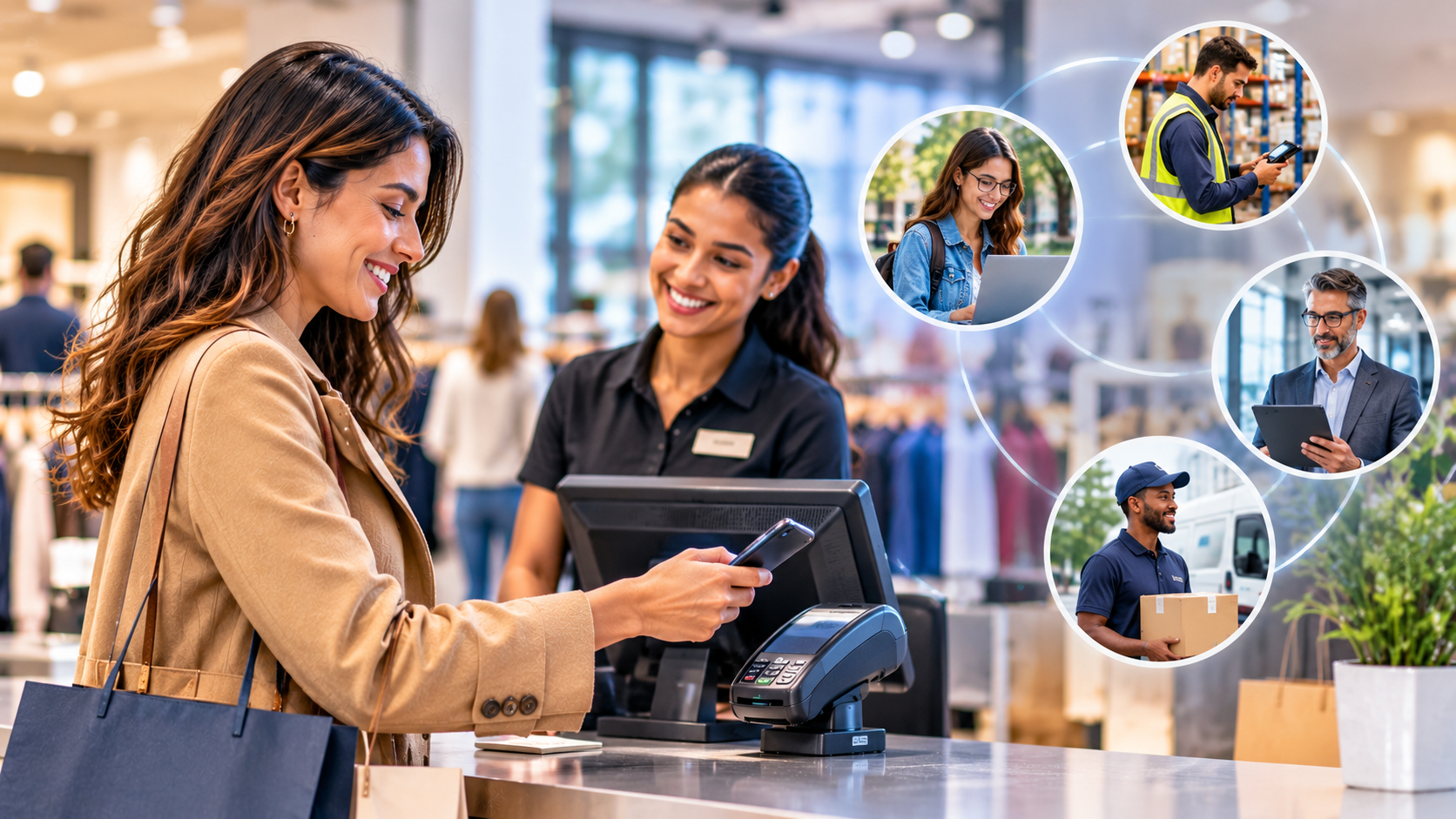
Identity management for retail has never been simple. A single retailer can employ store associates, warehouse teams, delivery drivers, corporate staff, and ecommerce specialists, while giving access to suppliers, logistics partners, and IT contractors. Many of those people join for a season and leave weeks later.
Every one of those identities needs the right access at the right time, and every one that is mismanaged is a potential way in. In 2025, UK retailer Marks & Spencer learned how costly that can be.
This guide explains what makes retail identity different, the challenges IT and security teams face most often, and how to build a program that keeps up.
What makes identity management for retail different?
Retail combines a large, fast-changing workforce, many physical locations, shared devices, outside partners, and millions of customers, all depending on access that cannot hold up a queue at the point of sale.
- Many locations, one identity system. Stores, distribution centers, headquarters, and online operations each need different access, but should follow the same policies.
- High turnover and seasonal peaks. Retailers hire in waves for holidays and promotions, then scale back, so accounts are created and removed in large batches.
- Shared devices. Point-of-sale terminals, handheld scanners, and back-office computers are often used by several people in one shift.
- A wide partner network. Suppliers, logistics providers, maintenance contractors, and IT service firms all need some level of access.
- Customers as users. Ecommerce and loyalty programs add customer accounts, which need a very different, low-friction login experience from employees.
Identity and access management (IAM) for retail has to handle all of these at once, without slowing down the store floor.
What does the Marks & Spencer cyberattack teach retailers about identity?
It showed that a convincing request to reset one password can be enough to take down a major retailer's operations.
M&S chairman Archie Norman told UK lawmakers that the attackers first got in on April 17, 2025, through a "sophisticated impersonation" that involved a third party. According to BleepingComputer's report of the hearing, the attackers impersonated one of the roughly 50,000 people who work with M&S to trick a third party into resetting an employee's password.
The impact was severe:
- Operations. M&S paused orders through its UK and Ireland websites and apps, and some store shelves went empty.
- Cost. M&S estimated a hit of about £300 million to operating profit, before any insurance recovery.
- Data. Some customer personal data was taken.
The lesson for retailers is that identity security extends beyond the login screen. Password resets, help desks, and the third parties who run them are part of the attack surface.
What are the main identity challenges retailers face?
Five challenges come up again and again: seasonal staff, supplier access, help desk resets, shared store devices, and mixing workforce and customer identity.
1. Seasonal and high-turnover staff
Holiday and peak-season hiring means large batches of new accounts, often created under time pressure. When the season ends, those accounts need to close just as reliably, but manual offboarding is easy to delay. Leftover accounts become unmonitored entry points.
How to address it: Drive account creation and removal from HR records, and give seasonal roles a predefined access package with a built-in end date.
2. Supplier, contractor, and partner access
Retailers rely on suppliers, logistics firms, maintenance contractors, and IT service providers. Each needs some access, and each is outside the retailer's direct control. M&S showed how a third party can become part of the attack path.
How to address it: Give every external account an internal sponsor, scope access to the specific task, require approval, and review it regularly until the contract ends.
3. Help desk and password resets
With large, changing workforces, help desks handle a steady flow of password and MFA resets. Each reset is a chance for an attacker to impersonate a real employee.
How to address it: Require strong identity verification before any reset, including resets handled by outsourced service desks, and offer secure self-service reset so fewer requests reach a human agent.
4. Point-of-sale and shared store devices
Store systems are often shared across a shift, and quick access matters more than anything at the checkout. Shared or generic logins make it hard to know who did what.
How to address it: Give each associate an individual identity, synchronize users and roles to store systems from a central source, and limit what each role can do in point-of-sale and back-office applications.
5. Workforce and customer identity in the same business
Employees, contractors, and customers all log in to retail systems, but their needs differ. Applying employee-style controls to customers adds friction, while applying customer-style convenience to employees weakens security.
How to address it: Manage workforce identity and customer identity as separate programs, each with policies suited to its users.
How can retailers build a retail identity and access management program?
Start with a single source of truth for every identity, then automate the lifecycle, secure every reset, and review access on a schedule.
- Connect HR and partner records. Use HR systems for employees and a sponsor-based process for contractors and suppliers, so every account traces back to a real person and an owner.
- Define role-based access by location and job. A store associate, a warehouse lead, and a regional manager need different access. Build standard packages for each role.
- Automate joiners, movers, and leavers. Create, change, and remove access as people are hired, transfer stores, or leave, including seasonal staff at the end of a peak.
- Set end dates for temporary access. Seasonal workers, contractors, and suppliers should have access that expires unless someone renews it.
- Secure authentication and resets. Use MFA where it fits, adaptive checks for risky logins, and strict verification for password and MFA resets.
- Review access regularly. Schedule access reviews across point-of-sale, inventory, finance, HR, and ecommerce systems to catch excess or outdated permissions.
- Keep customer identity separate. Manage customer accounts on their own platform, with registration and login designed for shoppers.
None of these steps requires replacing store systems. Most retailers can start with an inventory of accounts and a clear owner for each one.
Where does OpenIAM fit?
OpenIAM gives retailers one platform to manage workforce, partner, and customer identities across stores, warehouses, and online operations.
Retail IT teams should not have to rebuild access by hand every season. OpenIAM's Workforce Identity capabilities automate account creation and removal from HR records, including for seasonal staff and contractors. Access governance adds approvals and scheduled reviews across business-critical systems, and integrations such as SQL Server user and role synchronization can help keep store system access aligned with central policy. For shoppers, OpenIAM's Customer IAM supports secure registration and login, managed separately from employee access.
Why should identity management for retail be a priority now?
Because attacks like the one on M&S target people and processes, not just systems, and identity is where those meet.
Retailers will keep hiring for peaks, adding partners, and serving customers across more channels. Each change creates new identities to manage. The retailers that cope best will be the ones whose access follows each person's status automatically, with every reset verified and every temporary account set to expire.
Start with three questions: which accounts belong to people who have left, which partners still have access, and how your help desk confirms who it is talking to.
Talk to OpenIAM about bringing every retail identity under one consistent policy.
FAQ
What is identity management for retail, and why does it matter for stores, warehouses, and ecommerce teams?
It controls how employees, contractors, partners, and customers get, use, and lose access to retail systems. It matters because retail combines high turnover, many locations, and outside partners, which makes access hard to keep accurate.
How should retailers manage access for seasonal employees hired for holiday and peak periods?
Give seasonal roles a standard access package tied to HR records, with a built-in end date so access closes automatically when the season ends.
Why are suppliers and third-party contractors a security risk for retailers?
They need access but sit outside the retailer's direct control. The 2025 M&S attack involved a third party being tricked into resetting an employee's password.
How can retailers protect help desks from password reset and impersonation attacks?
Require strong identity verification before any password or MFA reset, including at outsourced service desks, and offer secure self-service resets.
What is the difference between workforce identity and customer identity in retail?
Workforce identity covers employees and contractors who need controlled access to internal systems. Customer identity covers shoppers who need fast, low-friction registration and login.
What should retailers look for in a retail IAM platform?
Automated lifecycle management, support for temporary and partner access, access reviews, strong authentication, and integration with store, HR, and ecommerce systems.